Otay Ranch homeowners who discover rats in their attic often assume they have an isolated problem. A gap in the roofline, a tree branch touching the eave, a neighbor with fruit trees. They call a pest control company, set traps, and move on. Then the following spring the scurrying sounds return. The insulation smells worse than before. The HVAC system starts running longer to reach the same temperature. And the pest control company wants to schedule another quarterly visit.
What most homeowners in Otay Ranch are never told is that their neighborhood has a structural rodent pressure problem that standard pest control contracts are not designed to solve. The geography, the construction era, the proximity to open space, and the specific way master-planned communities like Otay Ranch were developed combine to create conditions that give roof rats a permanent advantage over homeowners who address symptoms without addressing causes.
Otay Ranch was developed along the eastern edge of Chula Vista, directly adjacent to the Otay Valley Regional Park and the undeveloped open space that extends toward the international border. This was a deliberate planning decision. The park forms the eastern and southern boundary of the community, and that preserved natural land is exactly what makes Otay Ranch attractive to buyers. Rolling hills, native vegetation, canyon edges visible from back yards. It is also, from a rodent biology standpoint, an unlimited food source and habitat reserve that sits immediately against one of the densest residential areas in San Diego County.
Roof rats, the dominant species in coastal San Diego, are not random wanderers. They follow established routes between food sources and shelter. The Otay Valley Regional Park contains the vegetation, water access, and ground cover that roof rats need to thrive in large populations year-round. The residential streets of Otay Ranch, with their fruit trees, irrigated landscaping, and attic access points, represent everything those populations need to expand. The canyon edges and drainage corridors that run between the park and the residential areas function as migration highways. Roof rats travel along fence lines, utility wires, and rooftop-to-rooftop pathways that connect the open space to the interior of the neighborhood with no meaningful barrier.
Homeowners in Eastlake and Terra Nova face rodent pressure too, but those communities have more residential development on all sides and less direct adjacency to large open space. Otay Ranch properties along Village Seven, Village Eleven, and the eastern edges of Village One back up against open space in ways that create what pest management professionals call edge effect: the documented phenomenon where rodent populations at the boundary between developed and undeveloped land consistently exceed populations in either zone independently. The edge is where the food is and where the shelter is, simultaneously. Otay Ranch sits squarely in that zone.
According to the University of California Davis, roof rats will travel up to 300 feet from their nesting site in search of food. For Otay Ranch homeowners, this means a rat colony nesting in the Otay Valley Regional Park can reach residential rooflines, fruit trees, and pet food bowls well within a single night's foraging range without ever leaving the established route along fence lines and utility wires.
Female rats can have up to eight litters of two to fourteen pups per year, with a gestation period of just 21 days. A single breeding pair that enters an Otay Ranch attic in spring can theoretically become a colony of dozens before the first homeowner hears scurrying sounds in the ceiling which explains why infestations are almost always more advanced than they appear at first detection.
According to University of Nebraska research, rodent-damaged wiring is a documented cause of house fires rats and mice chew through wire insulation, leading to shorts, arcing, and ignition. In attics where roof rat colonies nest near HVAC wiring and electrical runs, this is not a remote risk. It is a measurable consequence of an untreated infestation and one that standard pest control trapping does not address because the wiring damage remains after the animals are removed.
Otay Ranch was built primarily between 1995 and 2015, which means the majority of its housing stock is now 10 to 30 years old. This age range is significant for attic integrity. The construction techniques used during that period in Southern California relied heavily on tile roofing with gaps at the eave course, open soffit vents covered with standard mesh screening, and minimal sealing around pipe penetrations and utility entries. These features were code-compliant at installation and remain structurally sound. They are also exactly the access points that roof rats use.
Standard mesh screening on soffit vents uses a half-inch or larger opening. Roof rats can compress their bodies through openings as small as a half inch and mice through openings smaller than a quarter inch. The screening installed on most Otay Ranch homes during that construction era does not provide meaningful rodent exclusion. It was designed for ventilation, not biosecurity. After 15 to 20 years of thermal cycling, UV exposure, and seasonal temperature swings between Chula Vista's coastal mild winters and inland summer heat, that screening has frequently corroded, warped, or pulled away from its frame at the corners, creating gaps that were not present at installation but are now open pathways.
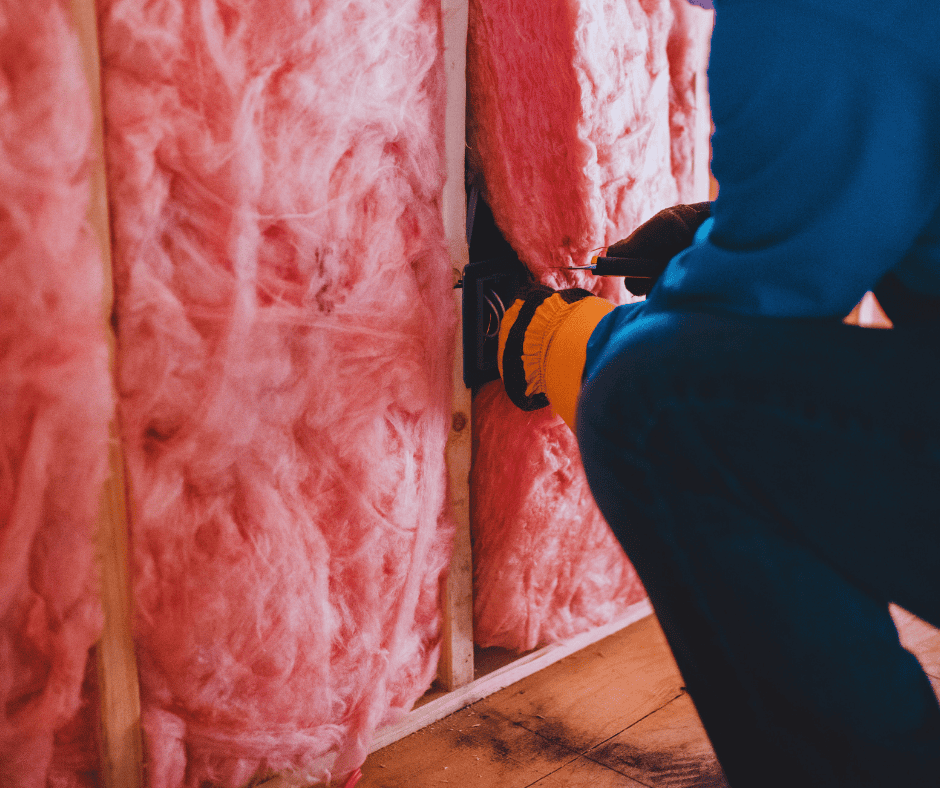
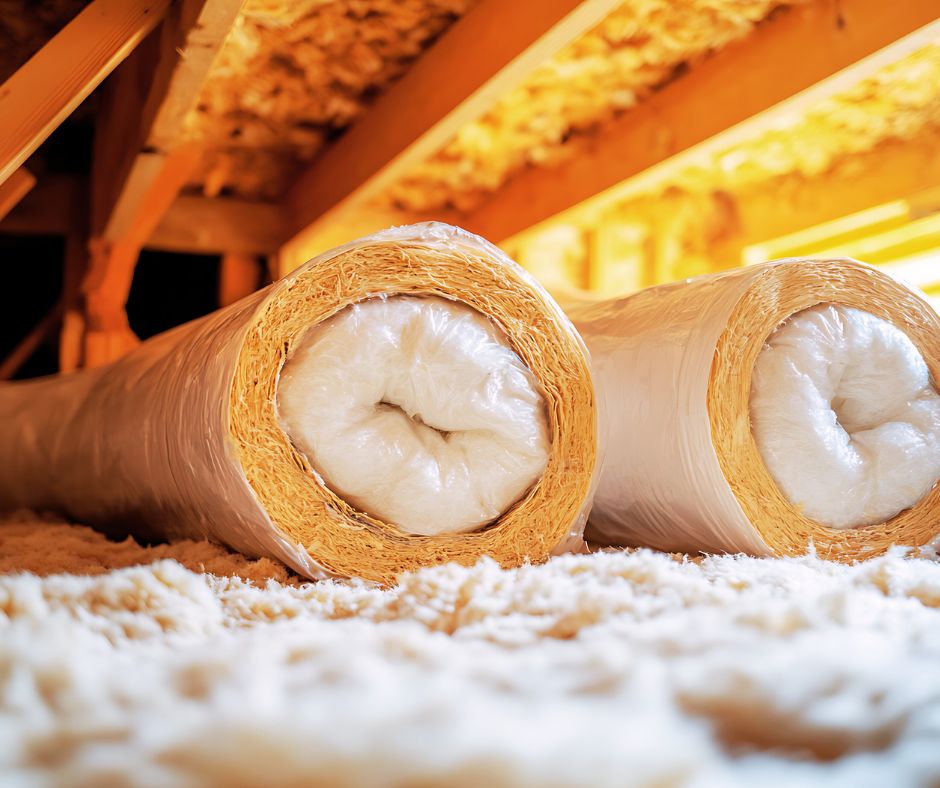
The tile roofing common throughout Otay Ranch presents a separate vulnerability. The gap between the bottom course of roof tiles and the fascia board, sometimes called the bird block, is typically filled with a mortar or foam closure at installation. That material shrinks and cracks over time. Roof rats routinely use these gaps to enter the attic space from the roofline rather than from the soffit level. In homes where the interior attic insulation is fiberglass batts at R-19 or R-30, installed when the home was built and never replaced, that insulation has been compressing under foot traffic from rodent activity for years. Compressed fiberglass loses R-value proportionally to its compression. A home with original 1990s insulation that has been hosting roof rat colonies for several seasons may be performing at half its original thermal specification, driving up energy costs for the HVAC system serving that space.

Most Otay Ranch homeowners discover a rodent problem through sound: scurrying at night, scratching near the eaves, noises from the ceiling above bedrooms. By the time those sounds are audible through the ceiling plane, the infestation has typically been established for weeks or months. Roof rats are cautious animals that avoid detection. The sounds homeowners hear represent a population that has grown large enough to produce noise incidentally during normal movement, not a single animal exploring.
During the period before detection, roof rats are actively nesting in the insulation. They shred fiberglass batts to create nest chambers, compress surrounding material with repeated use, and deposit urine and droppings throughout their territory. Rat urine contains pheromone compounds that communicate territory, food sources, and safety to other rats. A nest site that has been active for two months has urine-soaked insulation that broadcasts those pheromone signals to every rat moving through the area. This is why removal without decontamination consistently fails. The pheromone signal remains in any insulation left behind, and new rats moving through the area from the Otay Valley Regional Park follow those signals directly back to the established nest site within weeks of the original colony being removed.
The health implications of urine-soaked insulation extend beyond odor. Rat urine can harbor Hantavirus, a pulmonary syndrome with a significant case fatality rate that becomes airborne when contaminated material is disturbed. Salmonellosis bacteria are also present in rodent droppings and can be transported from the attic into living spaces through HVAC ductwork when the air handler draws return air through gaps in the attic assembly. In Otay Ranch homes where the air handler is located in the attic (a common configuration in the two-story designs built throughout Villages Five through Eleven), the return air pathway passes directly through the attic space, which means contaminated attic air mixes with conditioned air circulating through the home every time the system runs.
Pest control companies operating on quarterly or monthly contracts trap and poison active rodent populations. This addresses the symptom: the live animals currently in the attic, without addressing the three factors that guarantee the problem returns: open entry points, pheromone-contaminated insulation, and the continuous population pressure from the adjacent open space.
Ongoing contracts with companies like Orkin or Terminix make financial sense for their business model because they do not eliminate the conditions that create repeat calls. A quarterly contract in a home with open soffit vents and urine-soaked insulation is a permanent revenue stream, not a solution. After each treatment cycle, new roof rats from the Otay Valley Regional Park migrate along established routes into the neighborhood, detect the pheromone signals in the untreated insulation, and re-establish in the same attic within weeks. The homeowner continues paying. The problem continues returning.
The permanent solution requires three sequential actions completed in the correct order. First, every entry point on the structure must be physically sealed with materials rats cannot chew through. Second, all contaminated insulation must be removed and the attic space decontaminated to eliminate pheromone signals. Third, new insulation must be installed to restore the thermal performance that years of rodent activity have degraded. Completing any one of these without the others produces a temporary result. Sealing entry points without removing contaminated insulation leaves the pheromone signal intact, motivating rats to find new entry points. Removing insulation without sealing entry points leaves the attic open to immediate re-colonization.

Effective rodent exclusion for an Otay Ranch home begins with a complete perimeter inspection from ground level to ridge. Every soffit vent, roof vent, eave gap, pipe penetration, utility entry, and tile course gap receives assessment. The gaps that exceed a quarter inch in any dimension are documented and scheduled for sealing regardless of whether active evidence is present at that specific point. Roof rats explore systematically. A gap that has not yet been used as an entry point will be used eventually if the pheromone pressure from adjacent open space is sustained, which in Otay Ranch it permanently is.
Sealing materials must match the threat. Standard expanding foam is chewed through by roof rats within days. Steel wool compresses and corrodes without additional reinforcement. The durable solution is quarter-inch galvanized hardware cloth cut and fastened mechanically over every vent and gap opening, with steel wool packed into any irregular void before the hardware cloth is installed. Soffit vents receive new hardware cloth backing that replaces the original screening while maintaining the ventilation function the vent was designed to provide. Pipe penetrations and utility entries receive expanding foam reinforced with hardware cloth mesh set into the foam before it cures, creating a composite barrier that foam-chewing alone cannot defeat.
Eave gaps along the tile course require flashing installed between the fascia and the lowest tile row to close the space without disrupting the roof assembly. This work requires someone comfortable on the roof who can assess each section of the eave individually. The gap width varies with tile installation quality and age, and the flashing must be cut and fitted to each section rather than applied as a single uniform strip.
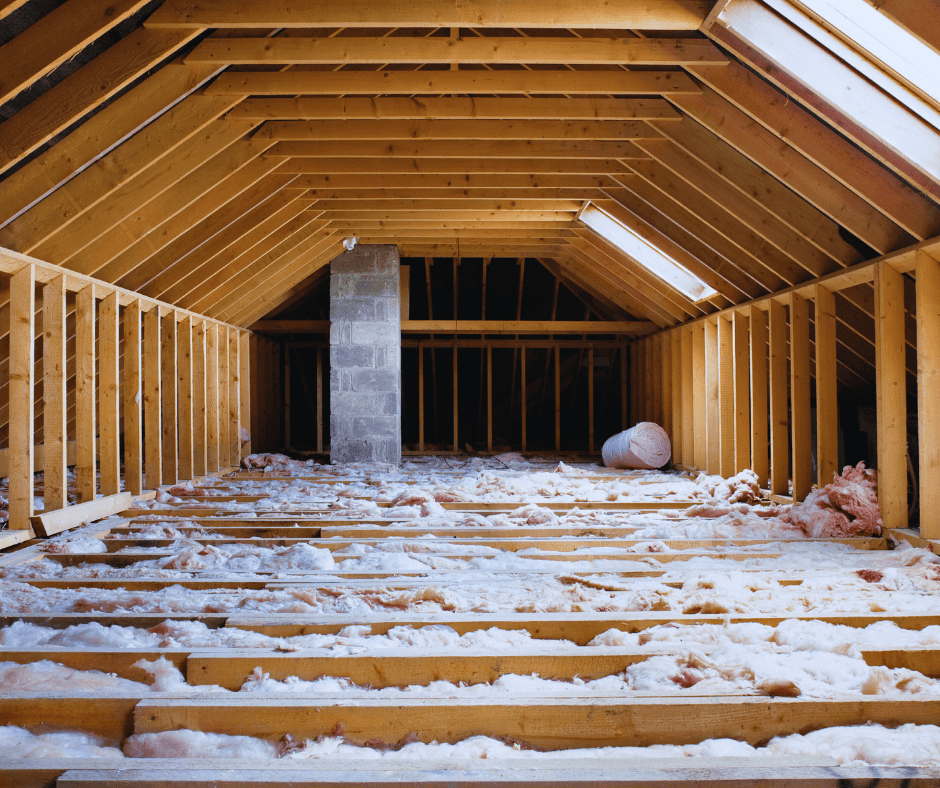
Attic insulation removal service in Chula Vista, CA home begins with the air handler and ductwork if the system is attic-mounted. HVAC duct insulation that has absorbed rodent urine becomes a continuous contamination source even after the structural insulation is replaced. If the duct wrap shows evidence of rodent contact, it is removed and replaced as part of the insulation restoration scope. Leaving contaminated duct insulation in place while replacing attic floor insulation provides an incomplete result.
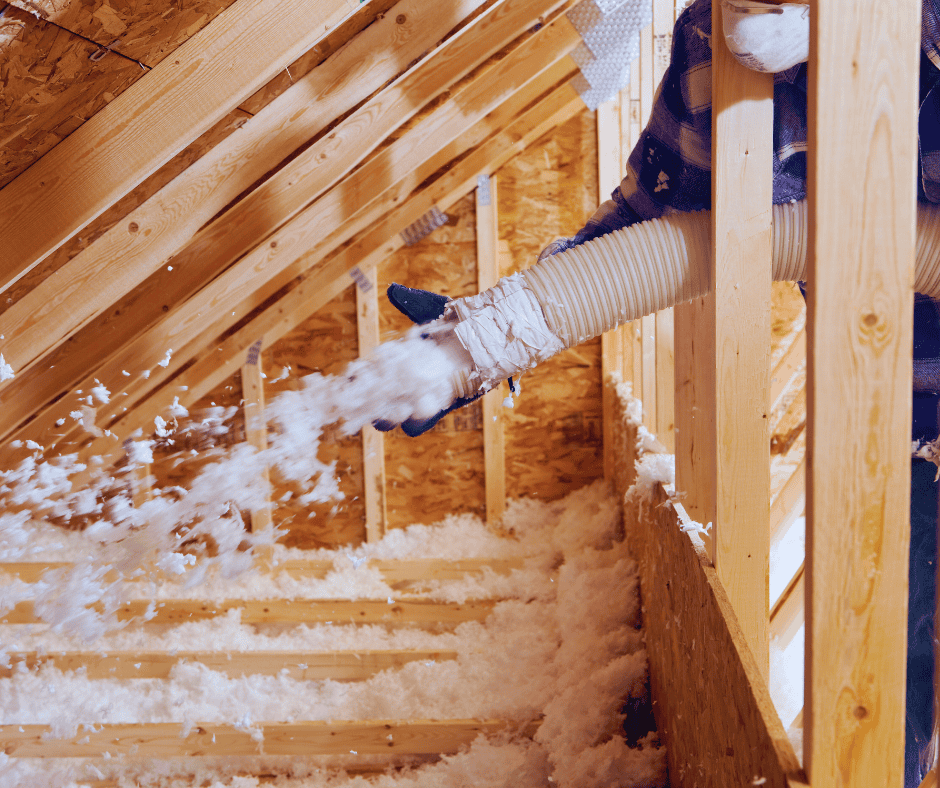
The removal process uses an industrial blower machine connected to sealed collection bags outside the structure, pulling insulation through a flexible hose inserted into the attic through the access hatch. This keeps contaminated material contained during removal rather than dispersing it into the living space below. Homes in zip codes 91913 and 91915 with fiberglass batt insulation in addition to blown-in material require manual removal of the batt sections before the vacuum extraction phase. Batts do not transfer through the hose intact and must be bagged directly in the attic space.
Once all insulation is removed, the attic floor, rafter surfaces, and any exposed structural members receive treatment with a ULV cold fogger applying EPA-registered disinfectant at concentrations effective against Hantavirus and Salmonellosis. The fogger generates a fine mist that reaches into joist bays, around HVAC components, and into any void space where contaminated material was in contact with the structure. A thermal fogger follows in spaces with heavy urine saturation to penetrate deeper into porous surfaces. HEPA vacuuming removes any remaining particulate from flat surfaces before new insulation is installed.
New insulation in Otay Ranch homes typically targets R-38 as the replacement specification, which exceeds California Title 24 minimum requirements for this climate zone and restores thermal performance beyond the original installation in homes built to the lower standards of the 1990s. TAP Insulation, a borate-treated blown-in product, provides the additional benefit of pest resistance. The borate compound is lethal to insects that contact it and deters rodent nesting by creating an inhospitable substrate for nest building. In neighborhoods with sustained open-space pressure like Otay Ranch, the deterrent property of the replacement insulation adds a meaningful layer of protection between exclusion sealing events.
Properties within a quarter mile of the Otay Valley Regional Park boundary, particularly those in Village Seven, Village Eleven, and along the eastern edge of Village One, face the highest ongoing rodent pressure in Chula Vista. Homeowners in these sections who have never had a professional attic inspection should schedule one before they hear scurrying sounds. By the time the sounds start, the insulation is already compromised and the pheromone signals are already established. An inspection that reveals no active infestation still identifies the entry points that will produce one, allowing exclusion work to be completed before contamination occurs rather than after.
Homeowners in Rancho Del Rey, Bonita Long Canyon, and San Miguel Ranch face lower but still significant pressure from canyon edges and drainage corridors in those areas. The inspection process and exclusion approach is the same. The difference is in urgency, not method.
AtticGuard provides free attic inspections throughout Chula Vista including zip codes 91910, 91911, 91913, 91914, and 91915. Every inspection includes a written entry-point report covering every gap, vent, and penetration on the structure, with photographs and a written quote for exclusion and insulation replacement before any work begins. AtticGuard operates as a CSLB-licensed contractor, bonded and insured, with a lifetime warranty on all sealed entry points. If a new entry point develops after exclusion work is completed, the team returns and seals it at no charge. Homeowners can schedule an inspection by calling (858) 567-2446 or visiting atticguardca.com. Same-day service is available for active infestations throughout the South Bay and North County San Diego service area.

Redirect to:
Redirect to:
|
This page is a redirect. The following categories are used to track and monitor this redirect:
|